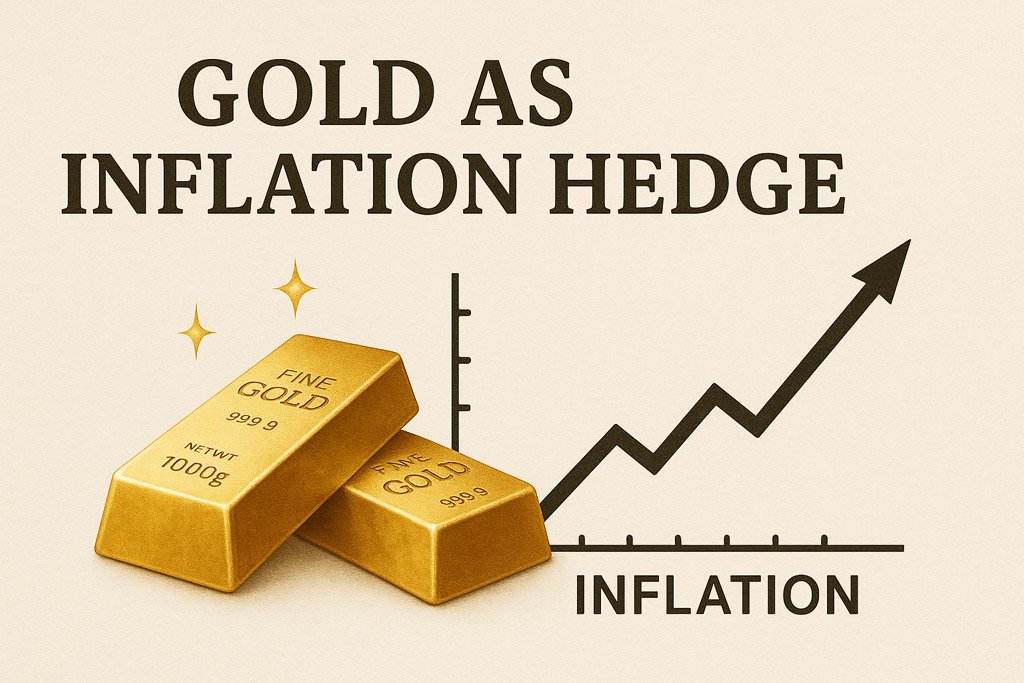
We are living in what historians politely call “interesting times.” A world defined by geopolitical tension, inflationary pressure, supply-chain instability, rapid technological upheaval, unpredictable markets, and currencies that often tremble under forces beyond anyone’s control. In times like these, individuals, institutions, and even nations search for stability—something that doesn’t collapse with stock markets, doesn’t evaporate with political chaos, and doesn’t devalue overnight because central banks print trillions.
Throughout thousands of years of civilization, from ancient empires to digital-age economies, one asset has consistently served as a refuge, a shield, and a store of trust:
Gold.
Gold is more than a metal. It’s a philosophy of security.
A timeless insurance policy against the unpredictable.
A financial anchor when the tides of history shift suddenly and violently.
In this article, we explore why gold remains one of the world’s most powerful hedges—especially in the complex and turbulent era we now inhabit. We dive into history, economics, psychology, geopolitics, and the changing architecture of global finance to understand why gold continues to shine when everything else becomes uncertain.
- Why Gold Endures When Everything Else Falters
Gold is unique among all assets for one simple reason:
It has intrinsic value that no government, corporation, or institution can destroy.
Unlike:
Stocks, which can go bankrupt
Bonds, which can default
Currencies, which can inflate into worthlessness
Cryptocurrencies, which depend on digital infrastructure
Commodities, which fluctuate with supply and demand
Gold stands apart.
Its value comes from:
Scarcity
Universal demand
Historical reputation
Physical durability
Independence from financial systems
Gold cannot be printed.
It cannot be hacked.
It cannot be destroyed by economic mismanagement.
This makes it the perfect hedge—not for ordinary times, but for interesting ones.
- History’s Most Reliable Financial Lifeline
If history teaches us anything, it’s that gold has repeatedly saved individuals and nations during crises.
- During hyperinflation
In Weimar Germany, people needed wheelbarrows of cash to buy bread.
But a single gold coin could feed a family for weeks.
- During geopolitical conflict
Gold has been used to secure passage, safety, and freedom across borders for centuries.
- During currency collapse
Argentina, Zimbabwe, Venezuela, and countless others have seen fiat become worthless.
Gold did not.
- During market crashes
When stocks fall, gold typically rises or stabilizes.
Gold has been:
A store of value during empire collapse
A safe haven during world wars
A currency during famine
A protection against central bank aggression
It is the ultimate backup plan.
- The Psychology of Gold: Why Humans Trust It
Gold’s value is not merely economic—it’s psychological.
Humans trust gold instinctively.
Long before nations, governments, or banks existed, people valued gold.
Why? Because gold:
Does not rust
Does not fade
Is rare but not too rare
Is beautiful
Is universally recognized
Every civilization—from Egypt to China to Rome to the Aztecs—viewed gold as precious. This universal psychology gives gold a power that no man-made currency can replicate.
Gold is trust you can hold in your hand.
- Inflation: The Silent Thief of Wealth
Inflation is often invisible, but its damage is real.
Inflation eats:
Savings
Salaries
Purchasing power
Retirement funds
Modern economies rely on inflation to stimulate growth, but excessive inflation destroys financial stability. When governments print money to solve economic problems, the value of currency falls.
Gold, however?
Gold rises when inflation rises.
This makes it a natural hedge against:
Monetary expansion
Fiscal irresponsibility
Excessive national debt
Declining currency value
When dollars, euros, pounds, yen, or rupiah weaken, gold strengthens.
- Gold in the Age of Economic Uncertainty
Today’s world is shaped by tensions and transitions:
U.S.–China rivalry
Global recession fears
Rising interest rates
Supply-chain fragmentation
Instability in emerging markets
Banking system vulnerabilities
Each of these pressures increases demand for gold.
In uncertain times, investors flee from risk and seek stability.
Gold becomes the anchor portfolio managers rely on to balance volatility.
When markets panic, gold becomes calm.
- Central Banks Are Buying Gold—A Strong Signal
Here’s one of the most important facts about gold today:
Central banks around the world are buying gold at the highest rate in decades.
Countries like:
China
Russia
India
Türkiye
Brazil
Poland
Singapore
…have aggressively increased their gold reserves.
Why would global powers accumulate gold?
Because:
They want independence from the U.S. dollar
They distrust the global financial system
They expect currency volatility
They foresee geopolitical realignment
Central banks do not make emotional decisions.
They make strategic ones.
If entire nations buy gold to protect themselves, what does that signal for individuals?
- Gold vs. Stocks, Crypto, Bonds, and Real Estate
Let’s compare gold to other major assets.
Gold vs. Stocks
Stocks can produce great returns
But they crash during recessions
Gold stabilizes portfolios during downturns
Gold vs. Bonds
Bonds depend on interest rates and government stability
Gold is independent of both
Gold vs. Real Estate
Real estate is illiquid
Vulnerable to debt cycles
Dependent on economic conditions
Gold is universally liquid and debt-free
Gold vs. Crypto
Crypto is modern innovation.
Gold is eternal value.
Crypto is:
Highly volatile
Still evolving
Vulnerable to regulation
Dependent on electricity and networks
Gold is:
Physical
Recognized globally
Immune to digital fragility
Crypto is the future of speculation.
Gold is the past, present, and future of wealth preservation.
- Gold Shines When Currencies Fail
Here’s a fact few people realize:
Every fiat currency in history has eventually collapsed.
Every. Single. One.
Examples:
Roman denarius
French assignat
German papiermark
Chinese yuan dynasty paper
Zimbabwe dollar
Venezuelan bolivar
Countless others
Why?
Because governments always fall into the temptation to print more money.
Gold, on the other hand, has survived:
Empires
Famines
Technological revolutions
World wars
Currency resets
When fiat fails, gold remains.
- Geopolitical Tension Makes Gold Even More Valuable
War, conflict, and political instability are some of the strongest drivers of gold demand.
Whenever:
Borders are threatened
Economies collapse
Alliances shift
Trade routes are disrupted
Energy prices spike
Military conflicts escalate
Gold surges.
Gold is the asset of peace during chaos.
- Gold as an Insurance Policy, Not a Speculation
Owning gold is not about chasing profits.
It is about protecting wealth.
Think of gold as:
Insurance against inflation
Insurance against recession
Insurance against war
Insurance against currency collapse
Insurance against systemic failure
Insurance is not meant to make you rich.
It is meant to prevent you from becoming poor.
Yet ironically, gold has made people rich—especially during crises.
- How Much Gold Should You Own?
Experts suggest:
5–10% for conservative portfolios
10–20% for uncertain markets
20–40% for high-risk geopolitical climates
Gold should be:
A foundation
Not your only asset
But not an afterthought
Gold is the bedrock on which other investments stand.
- Physical Gold vs. Digital Gold vs. Mining Stocks
There are multiple ways to benefit from gold:
Physical Gold
Coins
Bars
Bullion
Pros:
Tangible
Private
No counterparty risk
Digital Gold / Gold ETFs
Pros:
Easy to buy
Easy to sell
No storage issues
Gold Mining Stocks
Pros:
Higher potential gains
Higher risk
Each form has its place depending on your goals.
- The Timeless Role of Gold in Human Civilization
Gold has survived:
Every economic crisis
Every war
Every currency reset
Every political collapse
Every technological disruption
It is woven into human history:
As currency
As jewelry
As treasure
As power
As safety
Gold is not just an asset.
It is a legacy.
- Why Now Is One of the Most Important Moments for Gold
We live in a time of:
Record global debt
Aging populations
Weak currencies
Banking instability
Declining trust in institutions
Rapid technological disruption
Geopolitical fragmentation
This environment is exactly when gold becomes essential.
Not optional.
Not decorative.
Not symbolic.
But necessary.
Conclusion: Gold Is the Shield for Interesting Times
We do not choose the era we live in.
But we choose how to protect ourselves.
In a world of unpredictable events, rapid change, and rising global tension, gold is the one constant that offers stability.
Gold is:
A hedge
A protector
A store of value
A stabilizer
A historical guardian
The future may be uncertain, but gold gives you clarity.
The world may be chaotic, but gold gives you calm.
The times may be “interesting,” but gold keeps you safe.
As economies shift and the world transforms, one truth remains:
Gold endures.
And those who hold it endure with it.
Word Count:
1285
Summary:
While paper-based investments and real estate are vulnerable to effects of changing times, gold soars. A precious metals investment may save a portfolio when all else fails.
Keywords:
Gold, gold coins, gold coin, gold investment, gold investing, hedge, diversification, precious metals, oil crisis, currency, currencies, devaluation, appreciation, investment
Article Body:
While paper-based investments and real estate are vulnerable to effects of changing times, gold soars. A precious metals investment may save a portfolio when all else fails.
The old Chinese curse, �may you live in interesting times�, has particular relevance to the current epoch of U.S. history. There�s a lot going on right now, much of it scary. Major investors around the world are responding to the events of our perilous age by sinking their dollars, deutschmarks and yen into gold, silver and palladium; Bill Gates, Warren Buffet, and billionaire speculator George Soros to name but a few. Big financial institutions like the Central Banks of Russia and China are also leaping onto the metals bandwagon driving the price of these precious commodities ever higher.
This is spurring a gold rush not witnessed since the Misery Index years of the 1970s. Many financial experts now view gold in particular as an island of stability in a paper-based investment market growing stormier all the time, a development that bodes well for everyday folks who want to shore up their retirement accounts with a precious metals hedge.
�People the world over are losing faith in politicians, and currencies,� says Marc Lubaszka, President/CEO, World Financial, a highly successful investment firm specializing in precious metals based in Studio City, Calif. �This has resulted in a flight to gold and other precious metals, a storehouse of value for more than five thousand years. Investors are taking their money out of paper assets, and putting it where it is likely to earn a better return in uncertain times.�
Old Reliables Unreliable
Investments once considered as stable as granite are rapidly losing ground, Lubaszka explains. Real estate is but one example. Long praised as a slam-dunk by money gurus, home-buying is no longer viewed as a hurdle-free path to profit. Stratospheric pricing and higher interest rates are putting intolerable pressure on the current housing bubble, factors bound to bust the suds sooner or later and drive the overheated real estate market into deepfreeze.
�The housing bubble will burst rather than gradually deflate, following the rapid and violent pattern of decline of nearly every financial bubble throughout history,� Lubaszka says. �Higher interest rates negatively impact not only the health of the housing market but other economic segments as well. The stock market takes a hit because higher rates make it more costly for companies to pay for debt. Higher rates hurt corporate profit margins and reduce stock value, bad news given the deep debt situation so many companies are in today.�
Paper is Pass�
According to Lubaszka, the U.S. dollar has lost more than 80% of its original value since the early 70�s when we went to a floating currency, a situation not helped very much by the debut of the Euro in the late 1990s. Unlike American dollars, a portion of the Euro is gold-backed, a stability feature that has helped it outperform the dollar over the long haul. It is for this reason that many foreign investors have been taking money out of U.S. dollars and putting it into gold and oil instead, one explanation for why the price of both has continued to rise in recent months.
�Gold prices are climbing right now because the Federal Reserve is printing dollars in flood proportions to keep the real estate market afloat,� adds Richard Russell, editor Dow Theory Letters, a stock market trends and securities report published since 1946. �This is creating inflation, which erodes purchasing power. All the world�s central banks are inflating right now, reducing confidence in paper globally and encouraging gold-buying. India and China are spurring gold prices as well. India is the world�s largest gold-consumer, and the Chinese government is actively encouraging its citizens to buy gold.�
All are extremely encouraging signs for gold investors. Over the course of the past 35 years, gold has climbed in value from a modest $35 an ounce to nearly $600. Contrast that with the battered U.S. dollar, a currency currently worth only 20% of its value in 1970.
�When gold peaked-out in the 1970s, interest rates were at an all-time high,� Lubaszka says. �Right now we�re waiting to feel the effects of the last 9 interest rate increases which generally take 6-9 months to begin impacting the economy. Now�s the time to buy gold because when rates go up, downward pressure is exerted on real estate, stocks and bonds and commodities like gold tend to increase. The opposite occurs when rates travel from a high to a low. That�s the time to reduce gold assets and increase the paper part of a portfolio.�
Buy Without Getting Burned
Michelle Henderson, a talent agency owner in Los Angeles, Calif. understands the stakes when it comes to investing. �As an agent I work in a commission-based world, and have to invest in both people and ideas all the time,� she says. �Though I�d had bad experiences with stock investments in the past, I knew I would eventually find something that would work for me. I invested in a diversified metals portfolio made up of palladium, silver and gold, and earned a profit of 38% with the palladium alone. Staying focused on making money, and following World Financials advice, I was able to earn an above-average return and greatly increase the overall value of my assets safely.�
Lubaszka explain, �It�s probably best for the first time investor to begin conservatively by purchasing physical metals instead of gold stocks, which can be very volatile�. According to Clearwater, Fla.-based talk show host and gold analyst, Tom O�Brien, when metals gain 20%, gold equities jump by fifty or sixty per cent. That�s great when it happens but the reverse can occur as well.
Buy gold bars or coins, and put them in a safety deposit box. If you chose to purchase coins from a coin shop, make certain you pay the lowest price possible and that they have a buy back policy. If you elect to go with a broker, fees will be inevitable because you are purchasing a tangible commodity.
There are brokers, and then there are brokers. The best of the breed will answer all questions, and make the process of first-time gold buying less nerve-wracking. Great brokers are also accessible when needed, and quick to call with any new information that affects the value of the investment.
Work with established companies, five years in business is good, ten even better. Don�t bother with firms that badger you with telemarketing offers or apply high-pressure sales tactics. Avoid paying high commissions too. Some brokers have layers of fees, through which they earn more money then they do investing on behalf of customers. There are also companies out there that will not buy metal back. Stay away from them as well.
�Check references and Better Business Bureau ratings�, Lubaszka adds. �Deal with a company that takes an active interest in doing business with you. World Financial, for example, offers a five-star customer satisfaction guarantee. If questions are not answered or we fail to respond to a prospect�s call or email within 24 hours, that person receives a one ounce silver American Eagle coin free of charge. A financial advisor�s job is to ease the investment process, and to insure that customers get the most for their money. Good advisers are merely good, but the best are worth their weight in gold.�
To contact World Financial directly call 818.264.4085. World Financial is the premiere provider of precious metals to investors nationwide. Aside from offering numerous incentive programs, World Financial offers clients the right type of precious metal strategy for every investor�s needs. They are located at 12198 Ventura Blvd Ste 200, Studio City CA, 91604.





Tinggalkan Balasan